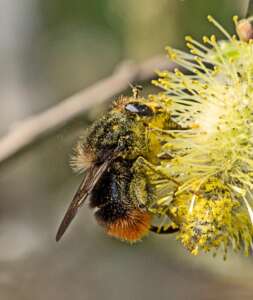
Dr Phil Smith: Wildlife notes March 2021

March was a relatively dry, settled month with measurable rain on only 10 days. However, wetter conditions from 9th to 16th raised the water-table at the Devil’s Hole to the highest level since I started measuring it in October 2015. The usual spring high pressure became established towards the end of the month, the warmest ever March temperature of 24.5 degrees being recorded in London on 30th. In Formby, it peaked at more reasonable 20 degrees. These spring heat-waves are becoming more frequent, as a predicted consequence of climate change.

(more…)

Continue ReadingDr Phil Smith: Wildlife notes March 2021

Aquatic Symbionts: Assessing the Abundance of Torix Group Rickettsia in Aquatic Insects around the World

Symbionts are known to be an important aspect of almost every living organism. Invertebrates are no exception. They display a remarkable range of symbiotic relationships with bacteria, which are capable of altering reproduction, defence against natural enemies, and play a role in nutrition. Up until now, most work has centred on a bacteria called Wolbachia which is commonly found in insects.

Wolbachia is relatively rare in Odonates (dragonflies and damselflies) and other aquatic insects, but recent work has suggested the presence of another similarly pervasive microbe. Our work has revealed that the bacterium Rickettsia is carried in 40% of midge species, and the Azure Damselfly (Coenargrion puella) can carry one or two strains of infection. Data suggests that Rickettsia is a common but underrepresented feature of freshwater invertebrates and our aim is to see how true this theory is.

(more…)

Continue ReadingAquatic Symbionts: Assessing the Abundance of Torix Group Rickettsia in Aquatic Insects around the World

That's your lot!

No more pages to load