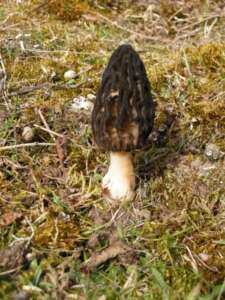
Fungi Fun: Morels
It is still early in the year for most mushrooms and toadstools. One family that relishes springtime is the Morel family. They are Ascomycetes dispersing their spores by shooting them through a tube, an ascus.

It is still early in the year for most mushrooms and toadstools. One family that relishes springtime is the Morel family. They are Ascomycetes dispersing their spores by shooting them through a tube, an ascus.
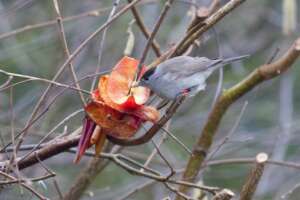
The allure of garden feeders has transformed the biology of a bird that visits Britain and Ireland for the winter. New research involving the British Trust for Ornithology (BTO), Oxford University and the Max Planck Institute, and just published in the journal Global Change Biology, provides further evidence of how humans are shaping the natural world through simple changes in our own back gardens. Increasingly mild winters and abundant garden bird food has led Blackcaps to establish new migratory routes, lead more sedentary winter lives, and perhaps even modify their anatomy.
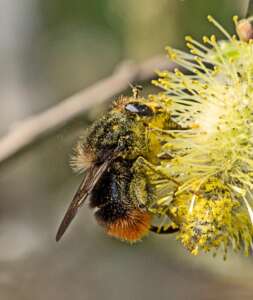
March was a relatively dry, settled month with measurable rain on only 10 days. However, wetter conditions from 9th to 16th raised the water-table at the Devil’s Hole to the highest level since I started measuring it in October 2015. The usual spring high pressure became established towards the end of the month, the warmest ever March temperature of 24.5 degrees being recorded in London on 30th. In Formby, it peaked at more reasonable 20 degrees. These spring heat-waves are becoming more frequent, as a predicted consequence of climate change.
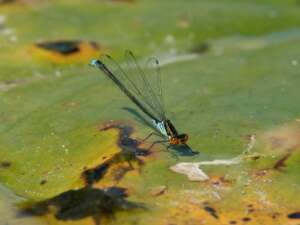
North Merseyside has a rich variety of wetland habitats suitable for dragonflies and damselflies, ranging from garden ponds to rivers, canals and streams and several large nature reserves. It also has a large and increasing number of dragonfly recorders and we currently hold almost 11,000 records – probably more than for any other group of insects. Twenty-four different species have so far been seen in the area. We are looking to gather as many records as possible during 2021!