Dr Phil Smith: Wildlife notes July 2021

Extreme heatwaves and prolonged spring and summer droughts are a predicted consequence of climate change. Fortunately, most of our sand-dune specialist flora and fauna seem able to cope at present, being adapted to life in harsh conditions.

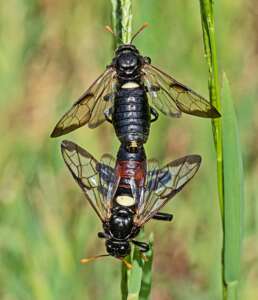
 A loud hum preceded the arrival of two enormous, tropical-looking insects that crashed into the grass a few yards away; each was over an inch long and their identity had me foxed until my photographs confirmed a mating pair of the Birch Sawfly. I’ve never seen one before and I was able to trace only a single previous Sefton record of a really impressive creature.
(more…)

Continue ReadingDr Phil Smith: Wildlife notes July 2021

Dr Phil Smith: Wildlife notes June 2021

Following one of the wettest Mays on record, June turned out to be one of the driest, with sparse rainfall on only four days. Fortunately, the damp weather in May and a legacy of the wet winter meant that the impact of the drought on duneland plants was less than it might have been. Nevertheless, the vegetation of road verges and other dry habitats was soon burnt to a crisp.

(more…)

Continue ReadingDr Phil Smith: Wildlife notes June 2021

Dr Phil Smith: Wildlife notes April 2021

According to the Met. Office, April was: “An incredibly notable month in terms of statistics.” It provided the lowest average minimum mean temperatures for the country since 1922 and was one of the sunniest and driest Aprils on record. Here, not a drop of rain fell for 30 days between 28th March and 27th April. As reported last year, these spring droughts are known to be linked to climate change but the general public is not being told this.

(more…)

Continue ReadingDr Phil Smith: Wildlife notes April 2021

Dr Phil Smith: Wildlife notes March 2021

March was a relatively dry, settled month with measurable rain on only 10 days. However, wetter conditions from 9th to 16th raised the water-table at the Devil’s Hole to the highest level since I started measuring it in October 2015. The usual spring high pressure became established towards the end of the month, the warmest ever March temperature of 24.5 degrees being recorded in London on 30th. In Formby, it peaked at more reasonable 20 degrees. These spring heat-waves are becoming more frequent, as a predicted consequence of climate change.

(more…)

Continue ReadingDr Phil Smith: Wildlife notes March 2021

That's your lot!

No more pages to load