
- Version
- Download 2
- File Size 7 MB
- File Count 1
- Create Date 25 January 2023
- Last Updated 25 January 2023
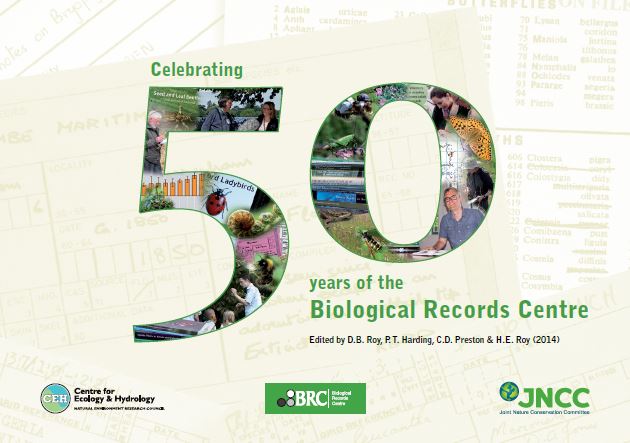
Celebrating 50 year of the Biological Records Centre
The UK is extremely fortunate in its rich history of naturalists – such as Gilbert White with his 1789 classic Natural History and Antiquities of Selborne or the army of Victorian enthusiasts (often vicars) who pressed flowers, collected butterflies and documented their parishes. These enthusiasts required structures, which led to an array of societies, such as Botanical Society of London formed in 1836, who became the Botanical Society of Britain and Ireland. Ambitious atlas projects generate a mass of important data of obvious value in the future so the Biological Record Centre (BRC) was born fifty years ago as a repository and to provide support.
The BRC has been central to much of UK conservation practice and research. The work on climate change impacts on distribution patterns is especially well known. The detailed distribution information means the BRC is central to much of the routine conservation practice in determining priorities and assessing possible threats. The BRC has also been fundamental to the National Biodiversity Network Gateway, an ambitious plan to bring together the main sources of UK biodiversity information.
We live in exciting times for monitoring, as seen by the BRC becoming increasingly more sophisticated in dealing with data. A range of novel techniques provide new opportunities for the application of natural history skills, such as the crowd sourced communities emerging to identify photographs or the apps that encourage field identification of neglected groups. We can be sure that everything will change: be it identification, documenting, feedback, or uses of the data. Thankfully I am sure that the real heroes of this story, the army of naturalists following in Gilbert White’s footsteps, will relish these challenges.