Dr Phil Smith
With climate change now well established, the Met. Office tells us that October 2026 was the ninth consecutive month with above average temperatures in Britain. As well as being warm, the month was also wetter and sunnier than usual. Rachael Parks sent me the rain-gauge data from her Formby garden. The total was 127mm, or about 5% more rainfall than average, mainly thanks to particularly wet days on 23rd and 24th linked to two named storms. The rain was much needed after the spring and summer droughts but the sand dune water-table was only just beginning to recover with an uplift of 9 cm. By the end of the month, Devil’s Hole still had no surface water, while Wicks Lake at Formby Point was similarly bone dry throughout.
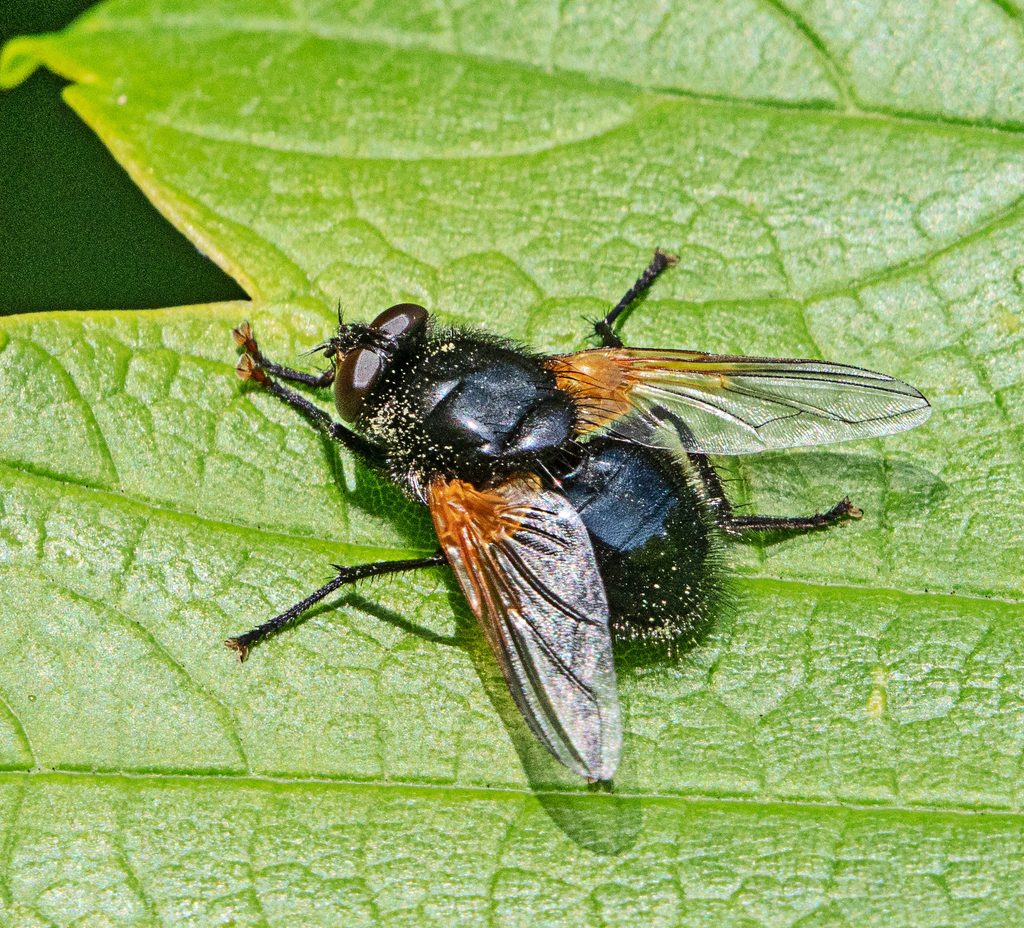
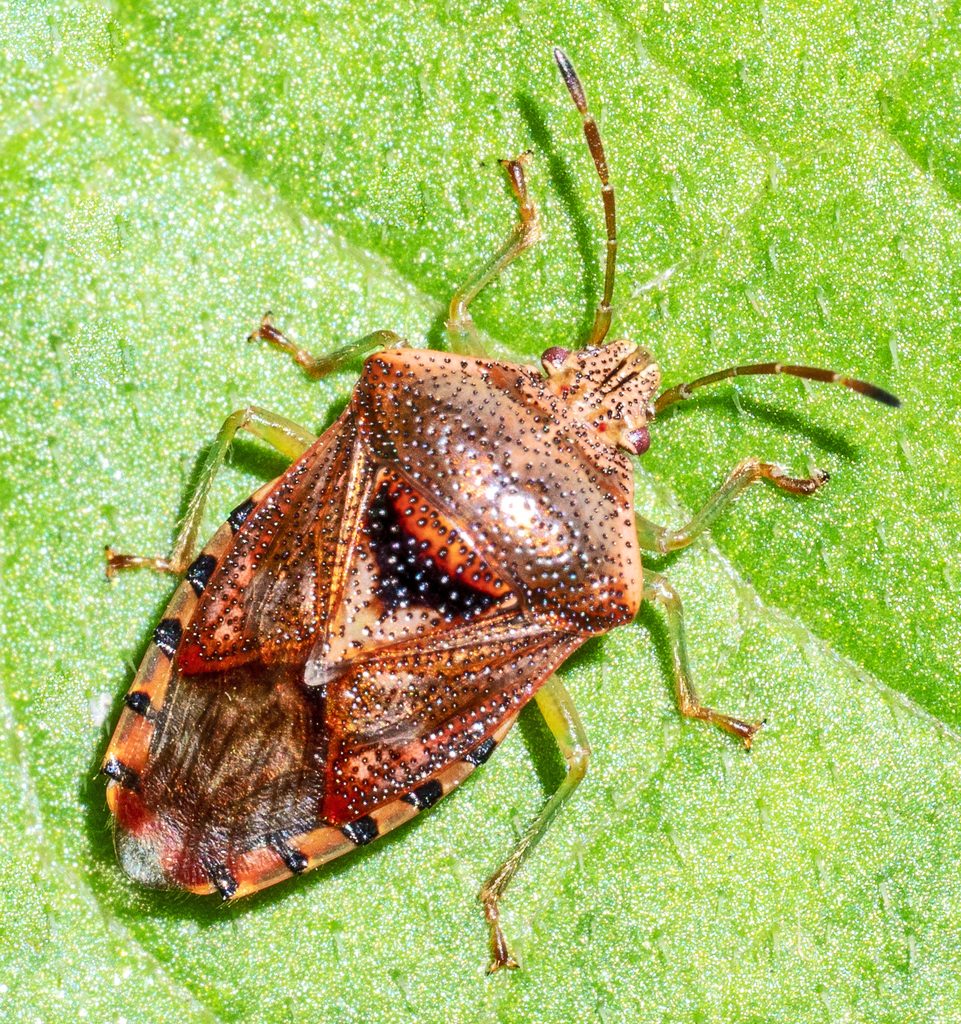
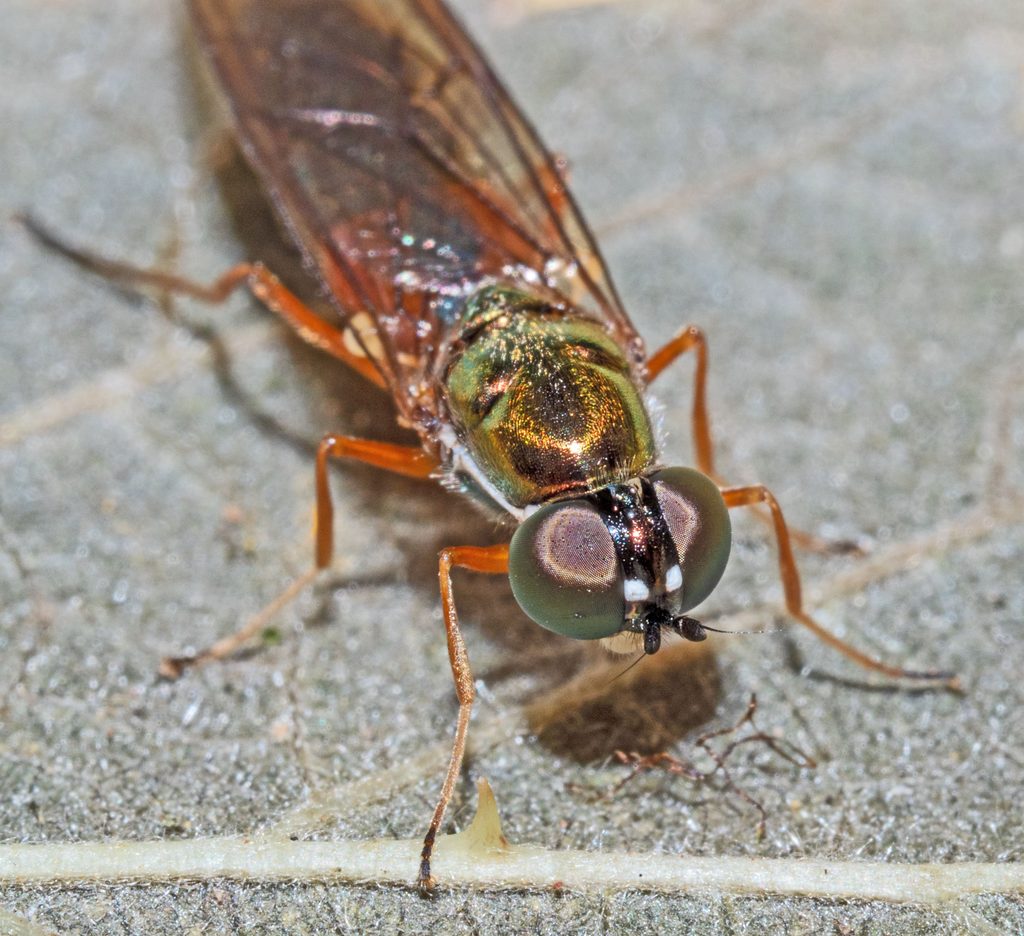
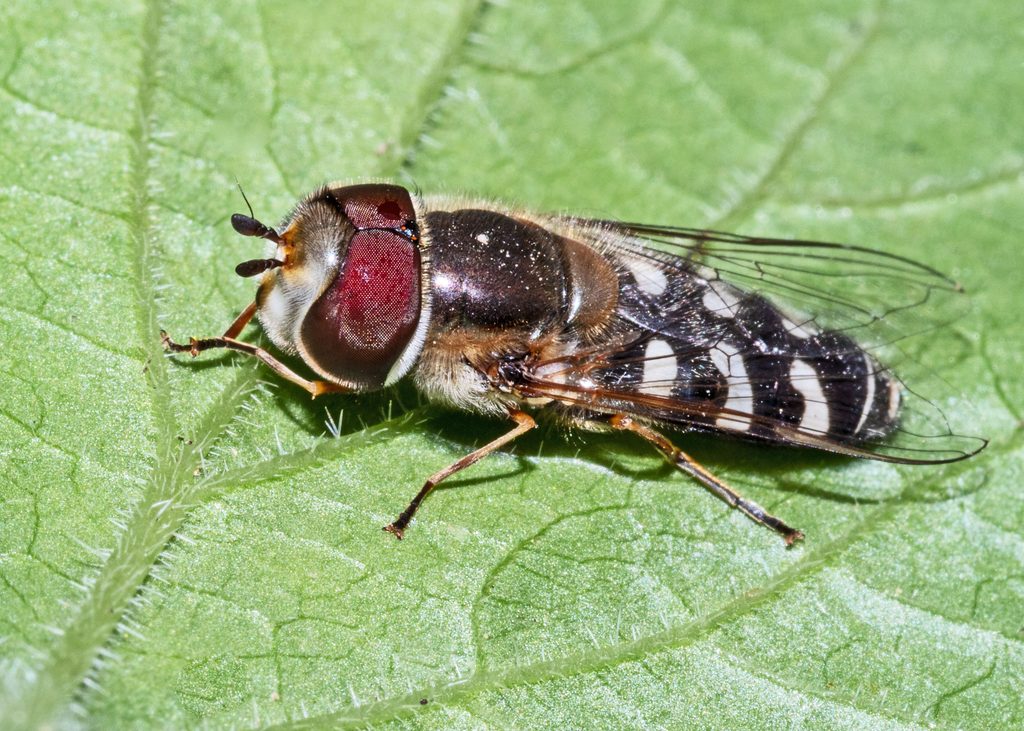
As expected, the numbers and variety of insects declined during October, despite often favourable weather conditions. Patches of flowering Ivy were still worth a visit, with occasional Ivy Bees until my last on 18th at Oxford Road, Southport. A new site for this species was at Village Way, Hightown, where a large Ivy patch also had a few common hoverflies. The oft visited Ravenmeols Ivy was rather disappointing but did produce a massive female Hornet Plumehorn and a Noon Fly. In striking black-and-orange, the latter is the largest member of the Housefly family. A minor highlight at Hesketh Road, Southport was the White-bowed Smoothwing, a smart black-and-white hoverfly that often occurs as a migrant. Small numbers of Red Admiral butterflies with the occasional Speckled Wood enlivened most of the Ivy patches. One of my favourite walks on the outskirts of Formby provided nine of the now ubiquitous Dock Bug, vying for attention with several Green and Parent Shieldbugs. After heavy rain, a new hatch of insects was evident at this site and I was surprised to count as many as 40 Bluebottles basking on a sunny tree trunk. The same place produced a Twin-spot Centurion, a typical autumn soldier fly that I don’t see every year.
Pete Kinsella sent me his Sefton Coast hoverfly records for the year. He photographed an impressive 92 species, compared with 100 in 2025. Weather played a big part during the season, with heatwaves causing a marked drop in hoverfly numbers, as noted elsewhere in the country. His major highlight was finding male and female Golden Longhorn at Ainsdale National Nature Reserve on 8th June. This nationally scarce hoverfly was new to both the Sefton Coast and the South Lancashire Vice-county.
Concentrating on the last of the insects meant very little time for birding but I did attend the Wildfowl & Wetlands Trust Martin Mere “Bird Fair” on 17th. After perusing but not buying any of the books on offer, I visited some of the hides noticing an adult male Ring-necked Duck with hordes of common Mallards. Assuming it was from the collection, I didn’t pay much attention to it. Later, I found out that it had been accepted as a wild bird, a vagrant from North America and a new “tick” for me! There was also a rather distant sleeping sandpiper that others in the hide had identified as a Wood Sandpiper. They left; it woke up and flew revealing it to be a Green Sandpiper! Ironically, there’s a lovely photograph by Steve Young of the Martin Mere Ring-necked Duck on the front cover of the 2025 Lancashire Bird Report. With 180 pages and numerous stunning photos, this superb publication, edited by Steve White, goes from strength to strength. Another bonus; members of the Lancashire & Cheshire Fauna Society get it for free! The Sefton highlight in the Report was an Olive-backed Pipit from east Asia, photographed at Hesketh Park, Southport on 4th March 2025. It was a first for the ‘Lancashire’ recording area.
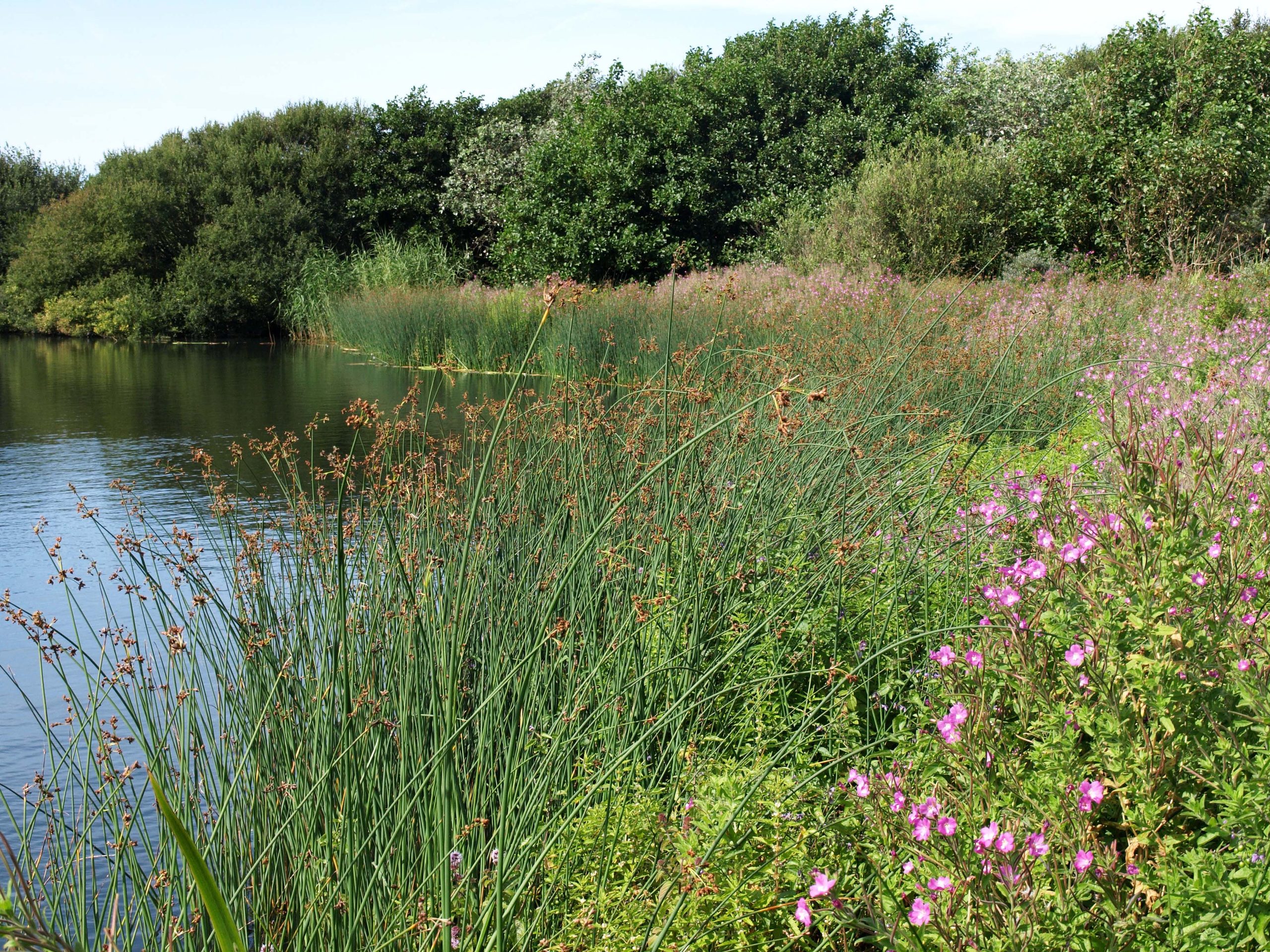
Autumn is the time when I start writing up various summer studies. My first contribution this year was a 24-page illustrated report on the wildlife value of Sands Lake, Ainsdale. This was, in part, a response to plans for possible redevelopment of the adjacent Sands public house and lake surrounds. Sands Lake has an interesting history, having been excavated by hand in 1911 to create a boating lake. Latterly, it has become increasingly recognised as an important wildlife site. Bringing together my own records with those of several local enthusiasts, I found that in recent years the lake and its surrounds attracted a wide variety of breeding, passage and wintering birds, seven or eight species of bats and over 200 insects, including 70 hoverflies and 19 dragonflies. Sands Lake has evident cultural and wildlife value, meriting sensitive management to retain and enhance these interests during potential redevelopment.
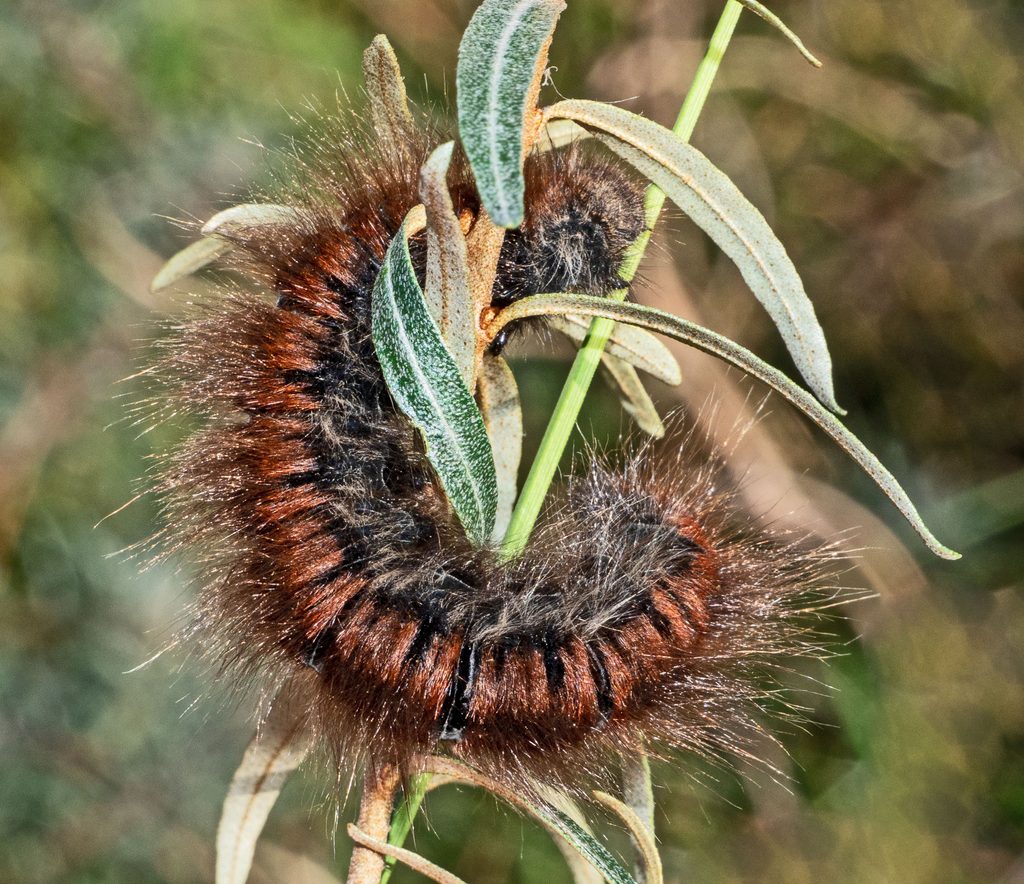
Sand dune management also gets going in October. I was pleased to hear that, as well as the usual flocks of Herdwick Sheep, the Lancashire Wildlife Trust’s 27 English Longhorn cattle will be grazing selected areas of duneland. Green Sefton is also contracting mechanised removal of more dense patches of invasive Sea Buckthorn. On a smaller scale, up to 14 of my volunteer ‘Buckthorn Bashers’ met on five occasions during the month to clear scrub regrowth in the dunes west and north of Sands Lake. One of the participants was delighted to find a very hairy Fox Moth caterpillar. New recruits for the ‘Bashers’ are always welcome.
All images Phil Smith unless stated otherwise