Changing flora of Devil’s Hole, Ravenmeols – 2022 update

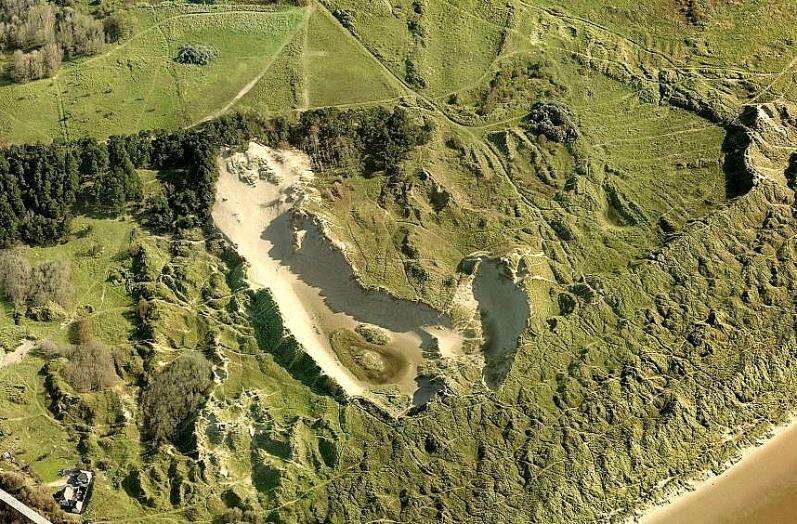
Summary The ‘Devil’s Hole’ is a large active blowout that originated in the early 1940s at Ravenmeols Local Nature Reserve on the Sefton Coast dunes. Wind erosion produced two calcareous, seasonally-flooded, dune-slacks that are still growing. Their floristic development was studied between 2004 and 2022, annual changes being monitored from 2012. By 2022, a total...
Wildlife Notes: November 2022

Just for a change, November was a rather damp month, with measurable rain on as many as 18 days. Even so, rainfall amounts for the region were about average. Therefore, the sand-dune water-table rose by only 5 cm, as measured at the Devil’s Hole. It was a generally mild month here with no frost at...

The Newest Green Beach at Ainsdale, Sefton Coast – 2022 update

Floristic data were collected each year from 2011 to 2022 on embryo dunes and an associated wetland that began to form on Ainsdale beach in 2008 as a southern extension of Birkdale Green Beach. Named the ‘Newest Green Beach’ and eventually covering 2.4 ha, this feature developed rapidly by accretion of blown sand, initially around Puccinellia maritima (Common Saltmarsh-grass), to form a dune ridge over 4 m in height, protecting a seasonally-flooded primary dune-slack. By 2022, 245 vascular taxa (species subspecies and hybrids) had been recorded for the feature. Annual totals initially showed an almost linear increase in the number of plants over time.

Scroll to top