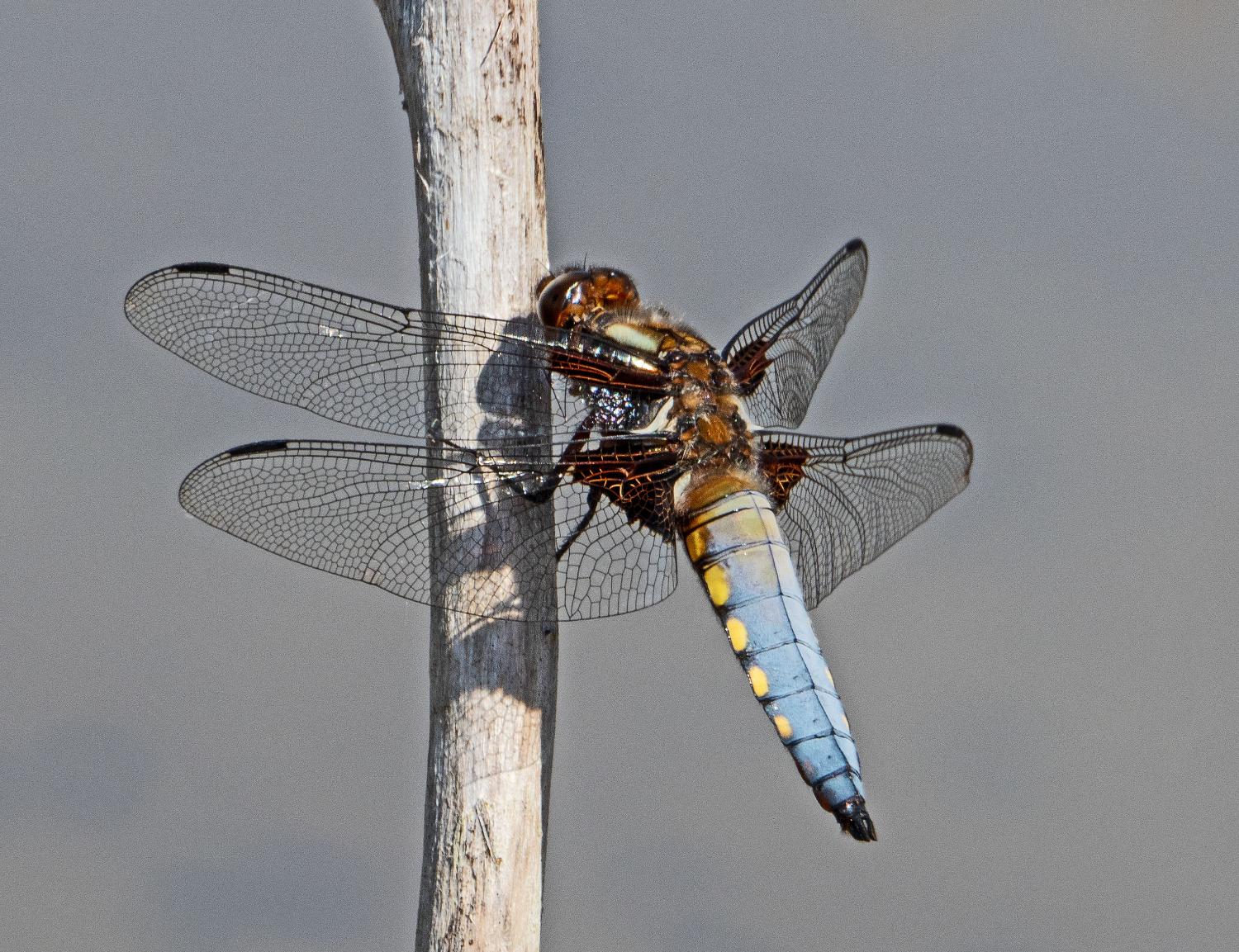
After a largely insect-free winter, I always look forward to March when things really begin to kick off. On 7th I was pleased to find a Greater Spring Blacklet basking on Ivy in woodland at Freshfield. This was a fairly early record of a widespread spring-flying hoverfly that mimics solitary bees.
Dr Phil Smith Wildlife Notes: February 2023
In contrast to last February’s three named storms in a week, this month was dominated by persistent high atmospheric pressure. As a result, there was measureable rain in Formby on only three days. The Met Office tells us it was the driest February in England since 1993, some places registering only 1.6 mm since 15th January. Most UK rivers are running well below normal levels, meaning less water for agriculture, water-supply and nature.
Dr Phil Smith Wildlife Notes: January 2023
The Met Office tells us that January was marginally warmer than usual with roughly average rainfall. No records were set, which certainly makes a change. It rained in Formby on about 13 days, though the second half of the month was dry. Gales in mid-month were followed by a cold spell but no snow.
Autumn Fungal Highlights of 2022 with Tony Carter
After the long, hot and dry weather it eventually rained. Then it forgot to stop. The season started late and was shorter than usual but there were some very numerous fruiting of certain species. I managed to visit a number of sites despite the weather. These are the highlights. At the end of September I...